
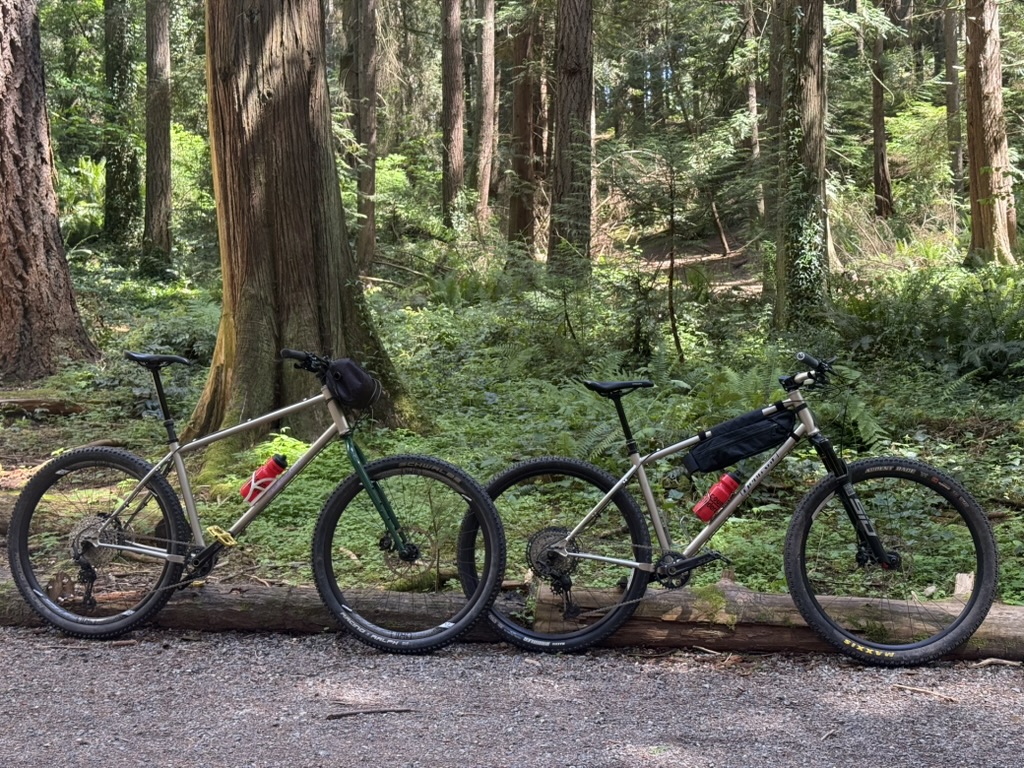
XL and L NFZ prototypes in Hamlin Park, Seattle. XL shown with Esker rigid fork, L shown with Rock Shox SID
Alex has talked about building a bike like this for the last couple years. He certainly could go and build a one-off, but as he discusssed it more, our buddy Lee got involved and given the other similar bikes out in the world at the moment, it seemed like perhaps this might be a bike other folks would want. So Glen agreed to build a tiny run of 10 bikes. The NFZ is the result. We asked Alex to write up detailed notes on the design...
TLDR: The Elephant NFZ is a cross-country mountain bike with tweaks towards comfort that make it better for mixed surface, long distance, and bikepacking rides. The rest of this document covers that information with a lot of detail.
The Elephant NFZ is aiming for that space between gravel bikes and XC race hard trails; for a bike that is comfortable for all day rides; confident on pavement, gravel, and trails; provides some cargo capacity for bikepacking; and practical for use as an every day bike. The geometry was selected to allow use of 100-120mm suspension forks or 480-500mm rigid forks (490mm axle to crown is the sweet spot). I used a modified old steel MTB frame to test out ideas for this project, and I've really fallen in love with that bike in the 3 years that I've been riding it. It quickly became my daily rider and adventure bike, commuting, riding with my kids, or on all of my mixed-terrain adventures (leaving my gravel bike lonely at home). The NFZ is a much improved version of that bike with improvements in design and geometry.
As a gravel bike replacement you can run larger tires, gain the option for suspension, and get the confidence that comes from a slacker front end and flat handlebars. It's really fun on long mixed surface rides.
As a mountain bike it is comfortable and fun on trails, with a suspension option to take the sting off, but engaging and direct in the way that a hardtail can be. It makes those blue and green trails more fun than your big trail or enduro bike. It compliments that bike, but doesn't replace it.
The NFZ is ideal for rides that mixes many types of terrain into one day. Imagine that perfect 50 mile day where you climb a long paved mountain pass, descend a mix of logging roads and fun singletrack, eat lunch at a nice clearing by the river, and then roll back down to your start point.
On Monday that same NFZ can be your commuter into work; perhaps giving you an excuse to take the long route home through the woods.
The NFZ started with dialing in the geometry. The NFZ is not a modern trail bike, a XC race bike, or a 90s ATB. Instead we're taking the best parts of all of them.
The front end of the NFZ is basically a modern MTB. It has a long top tube that pushes the front wheel out of your way and helps you gain more confidence in tricky terrain. The 67 degree head tube angle is a lot slacker than classic mountain bikes, but has less flop and handles better on pavement than the sub-65 degree head tube angles used on aggressive trail bikes. I've tried multiple angles for this bike and found 67 to be a great compromise for road and trail riding.
The rear of the bike is more of a classic MTB. The seat tube angle is slacker than what you find on modern trail bikes, but provides more comfort when riding in a seated position on rolling terrain. The steep seat tube angles on modern trail bikes are very efficient if your ride is primarily steep climbs and descents, but that steepness also pushes your body weight onto your hands. I find that position fatiguing when riding in a seated position for longer periods of time. The NFZ is still a capable bike, but adjusted towards comfort.
The NFZ's seat tube is long and the top tube is higher than most modern MTBs. This provides more space in the front triangle to fit water bottles and frame bags. The seat tube length was selected to allow most riders to fit a 150mm dropper, and many riders will find that they can go longer.
The NFZ chainstays are also about 2cm longer than most modern MTBs. This balances out the slacker seat tube angle, provides stability, and keeps the bike planted on long climbs.
The bike fits 2.4" (or even 2.6") tires with plenty of clearance thanks to a custom yoke that we designed. There are great 2.3-2.4" XC tires available that work well on pavement, hardpack, and trails like the Continental Dubnital, Schwalbe Rick XC or Thunderburt, or Maxxis Rekon Race. You could run 50-55mm gravel tires with plenty of room for fenders if you'll be riding more pavement but still want to ride some trails.
The NFZ is designed to use a rigid or suspension fork. Details on fork options are later in the document. We choose 100-110mm (or 120 mm with 25-30% sag) length suspension forks because these line up with the greatest number of rigid fork options and allow the bike to be used either way. If we had designed it for 120-130mm forks anyone running a rigid fork would have ended up with a bike that had a steeper than intended geometry. Additionally the lightest suspension fork options are designed for XC and come in this 100-110mm range. (A 120mm fork with 25-30% sag should also work.)
The NFZ has sliding dropouts. Sliding dropouts are simple and give you the ability to finetune chainstay length or run the bike as a singlespeed. This is part of making a more versatile frame.
The NFZ is a long bike and a lot of that length is in the top tube. To size the bike I would compare top tube lengths to your favorite modern MTB rather than reach. It's okay to go a little long, especially if you intend to use bars with a lot of sweep since those shorten reach.
Here is some rough sizing guidance:
Everyone's body and preferences are unique, so please compare sizing on Bike Insights with bikes that you know and love to find the right size for you.
I'm 5'11" and normally ride 57-59cm road frames or size L bikes by Kona or Ibis. The large NFZ fits me perfectly.
The NFZ is an easy bike to build up and uses the most common hardware standards.
The NFZ uses a mix of well selected tubing from a variety of suppliers to provide the best ride. Glen has decades of experience in building awesome riding bikes, including the popular Elephant NFE. The 35mm downtube and 28.6mm top tube on the size large are a little smaller diameter than what you'd find on trail bikes, which makes the front triangle a little more flexible and provides for a less fatiguing ride. The seat tube is sized to fit the most common 31.6mm droppers.
Our goal with the NFZ was to provide enough accessory points to cover most needs, without going overboard.
We did not put upper rack mounts on the seatstays. Why not? Most modern bikepacking racks like the Ortelib Quick-Rack and Tailfin racks will clamp to the seatpost or seat tube. Also it is easy to find a seatpost clamp which has integrated rack mounts, and these are located in the ideal spot for traditional rear racks such as the Tubus Vega.
There are no brazeons for bolt-on frame bags. The standards for these brazeons are not mature, and they are ugly if they aren't being used.
The NFZ uses mountain bike standard parts like boost wheels, 31.6mm dropper seatposts, and tapered suspension forks.
I like how the bike rides with bars that have a little more sweep than what I'd use on a trail bike. The SQLabs 30X 16 degree, Whisky Scully 23 degree or Ritchey Kyote 27 degree bars are good options. For my height and riding style the size large NFZ built with Kyote bars with 35mm stem feels perfect. Don't forget that it is okay to trim your handlebar width – I personally find 720-750mm bars to feel better on this bike than 800mm.
We built the prototype bikes with mid-range (Deore, SLX, XT) Shimano drivetrains and brakes. Shimano 1x11 and 1x12 drivetrains are reliable and affordable and provide good gear range. I'm running with a 34t chainring on my NFZ, which is about 10% larger than what I'd use on a trail bike, where Lee is running a lower 30t ring. The NFZ will fit up to a 36t ring so you have lots of options. The NFZ does require "mountain" cranks, the yoke won't fit road cranks.
For a light build that will mostly be used on gravel, pavement, and basic trails consider a carbon fiber fork. I wanted to be comfortable on more technical terrain, so I picked the Rock Shox SID in 100mm length. It's a nice feeling fork and much lighter than the Fox 34s that I'm used to. I'm also intrigued by the heavier but more robust Wren inverted fork that we put on Lee's bike. I did a basic service on this fork and it looks like a great and simple design that should require less maintenance.
I think this bike deserves nice wheels and tires. Light wheels (aluminum or carbon) with 30mm rims and nice tires really like the bike perform well – I'm using the wheelset from Ibis that comes stock on their Exie XC race bike. We're using Conti Dubnitals in 2.4" on the prototypes because they are some of the fastest rolling XC tires available. I'm also a fan of the Schwalbe Thunderburt, and the right combo might be a Dubnital (or Schwalbe Rick XC) up front with a slicker Thunderburt in the back.
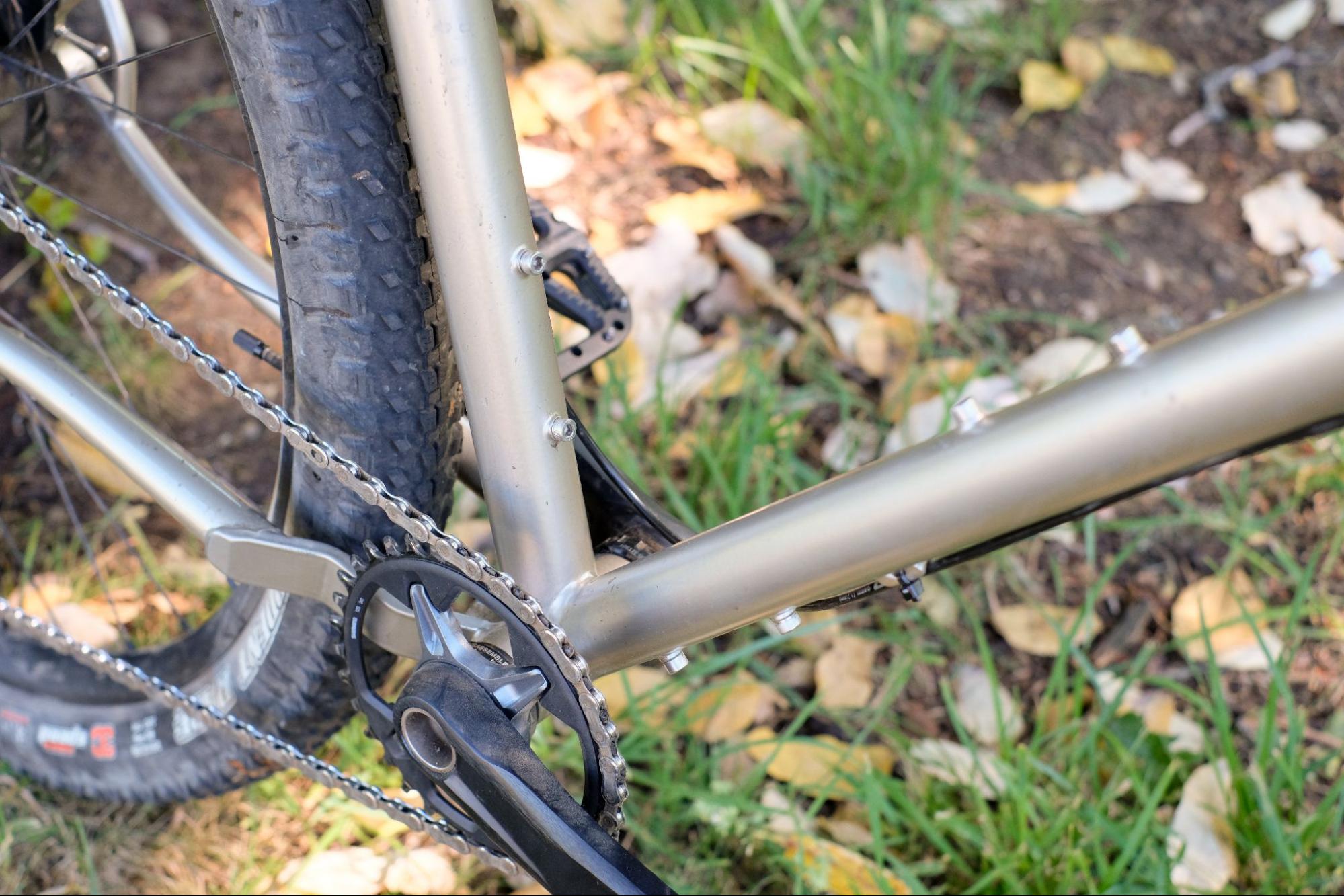
Water bottle bosses: 3-pack Downtube, Seattube, Under the DT
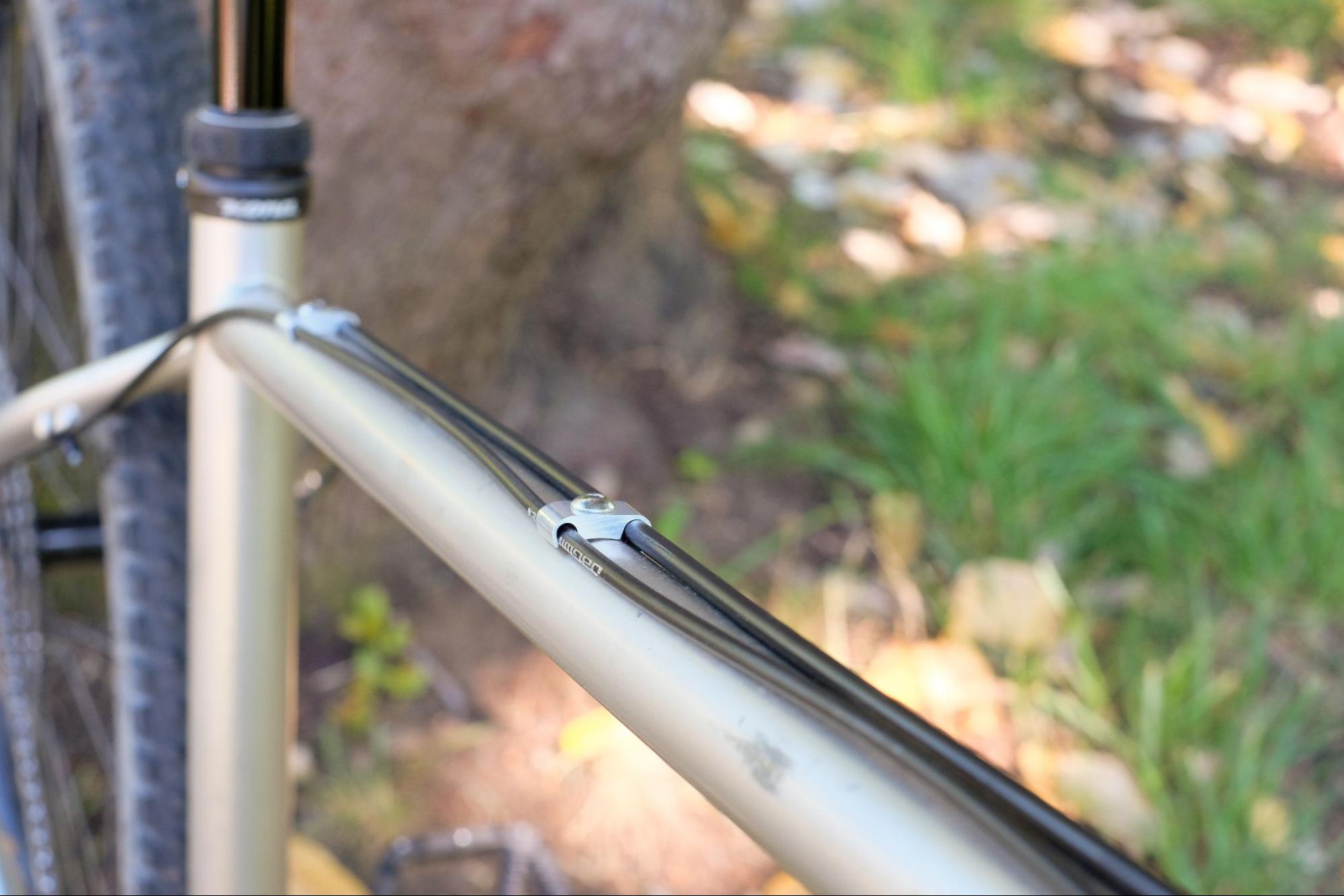
Slick bolt-on cable management. Shown here along the top tube. Production version will route these under the down tube.
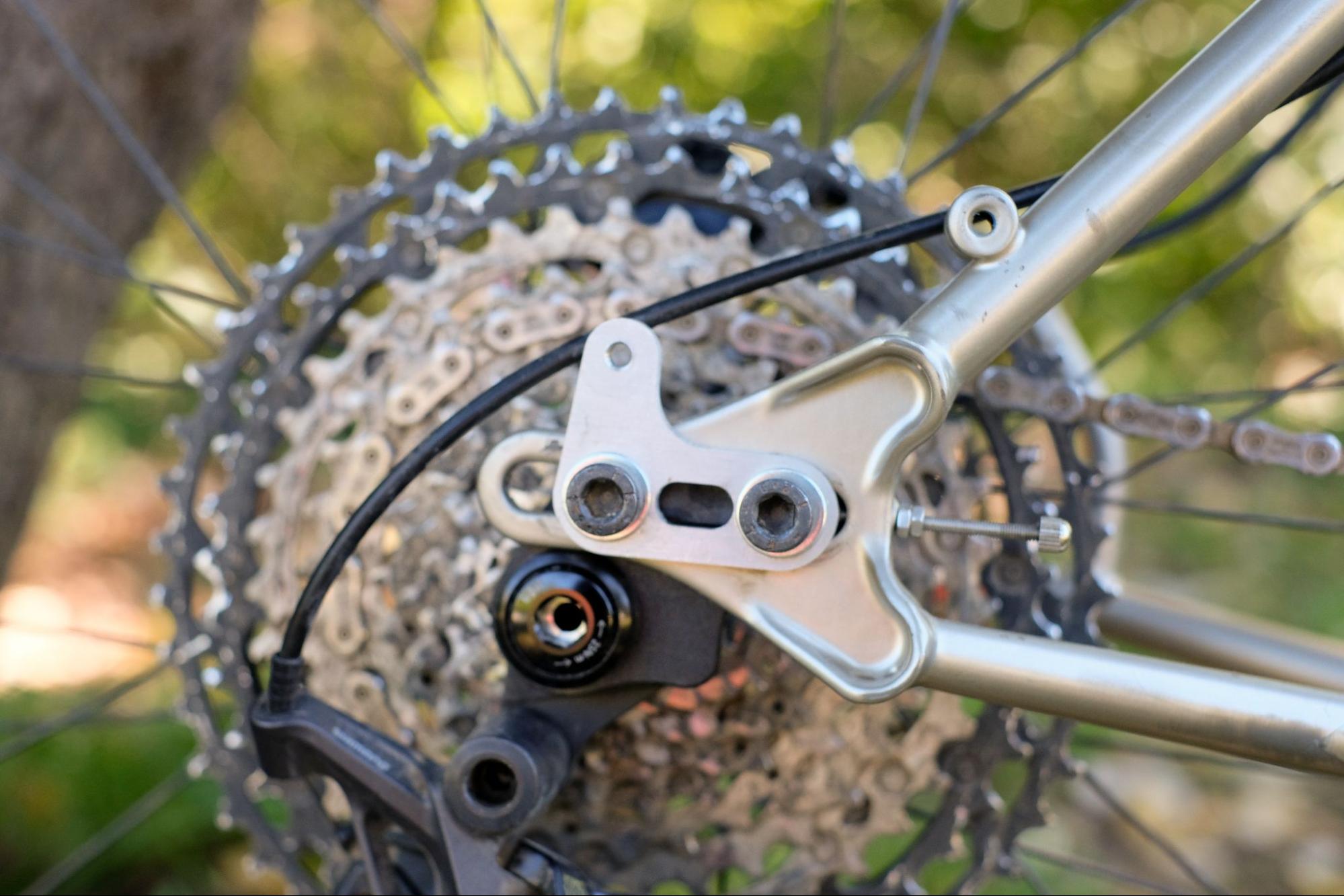
Sliding eyelets for racks and fenders. Production bikes won't have seatstay eyelets or the UDH hanger.
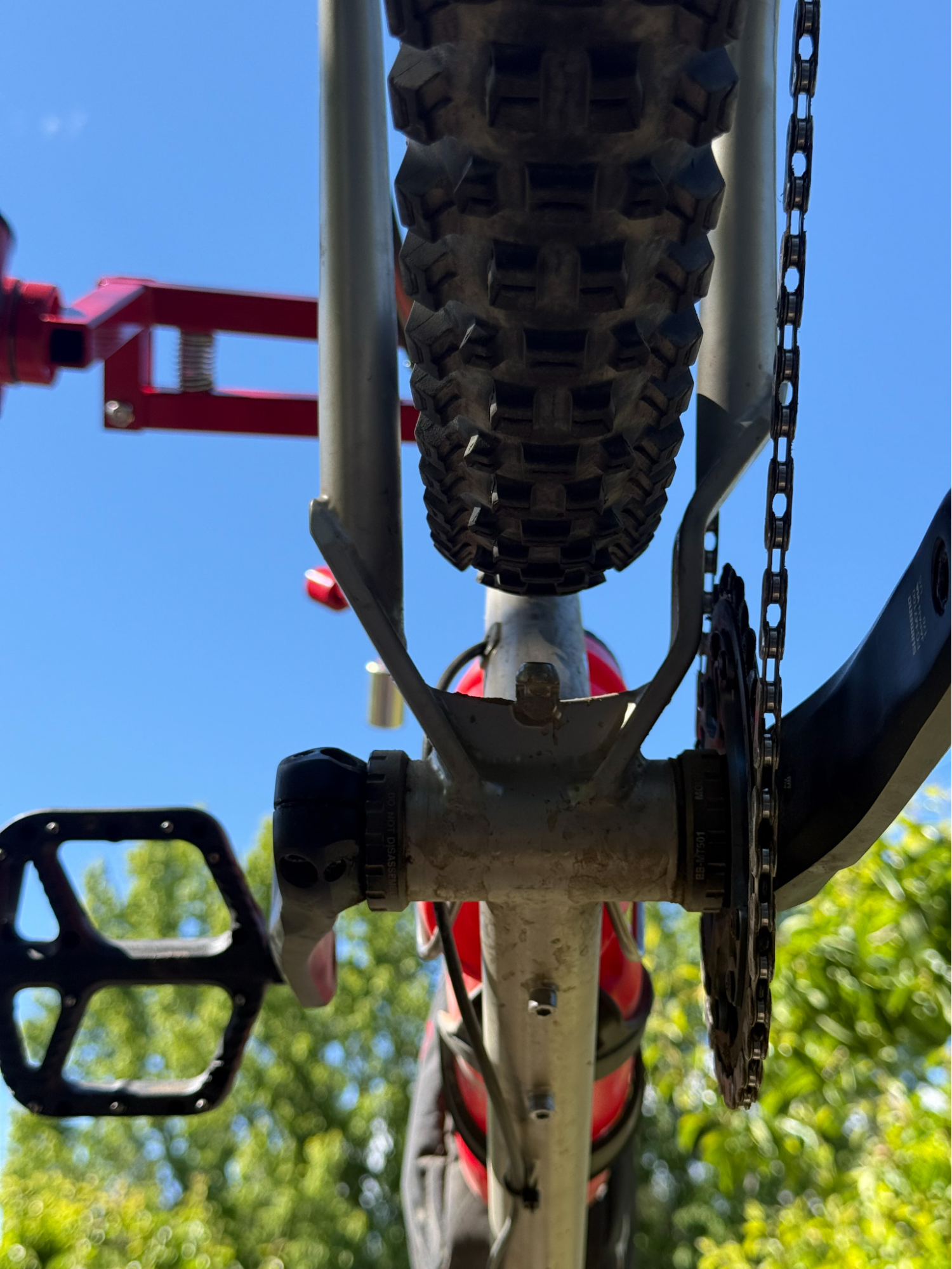
Clearance with a 2.5" Schwalbe Fat Albert. Production bikes may have slightly increased clearance due to design tweaks in the yoke.
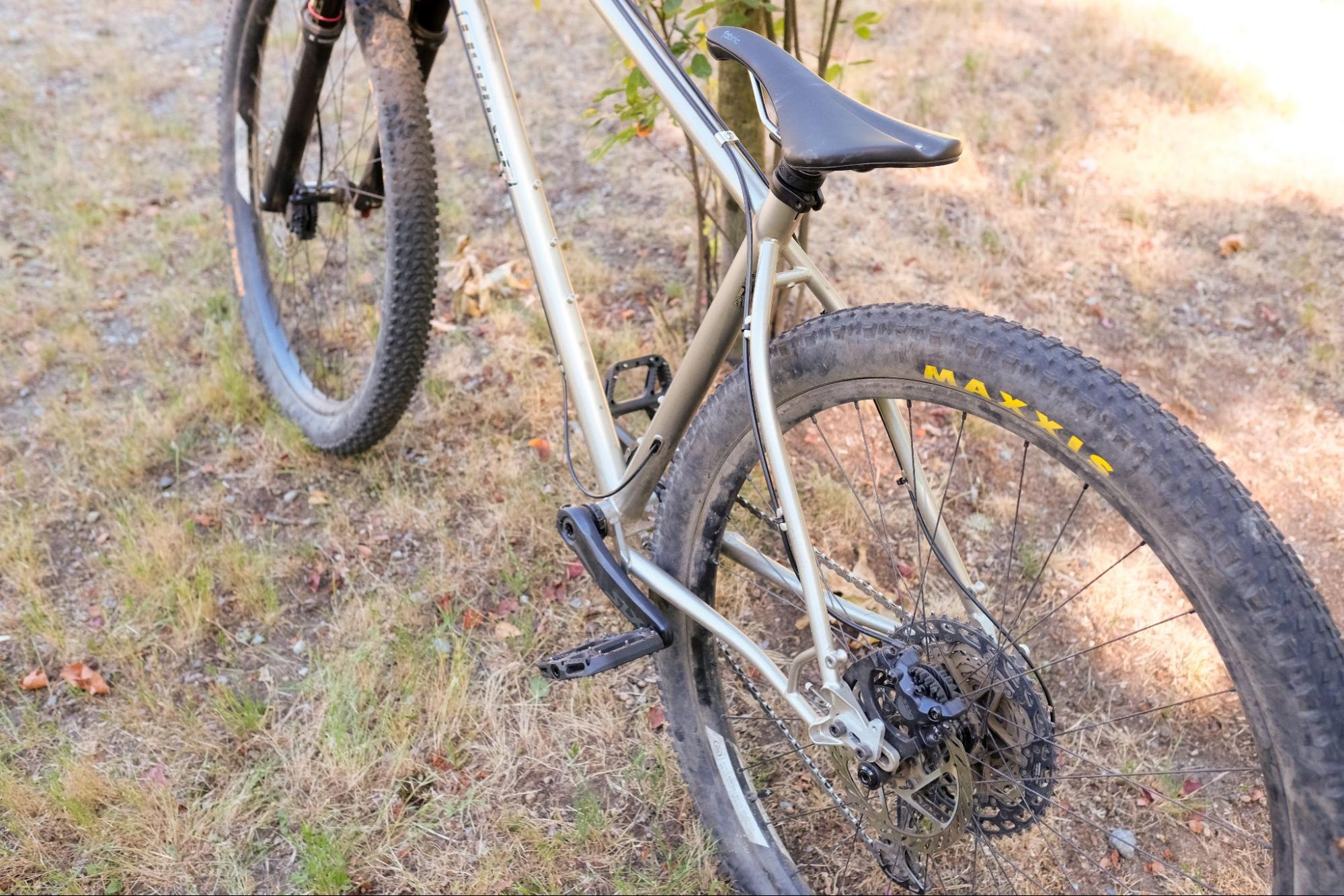
Dropper port low on the seat tube and a 175mm dropper on Alex's bike. Bent seat and chainstays for foot and tire clearance.
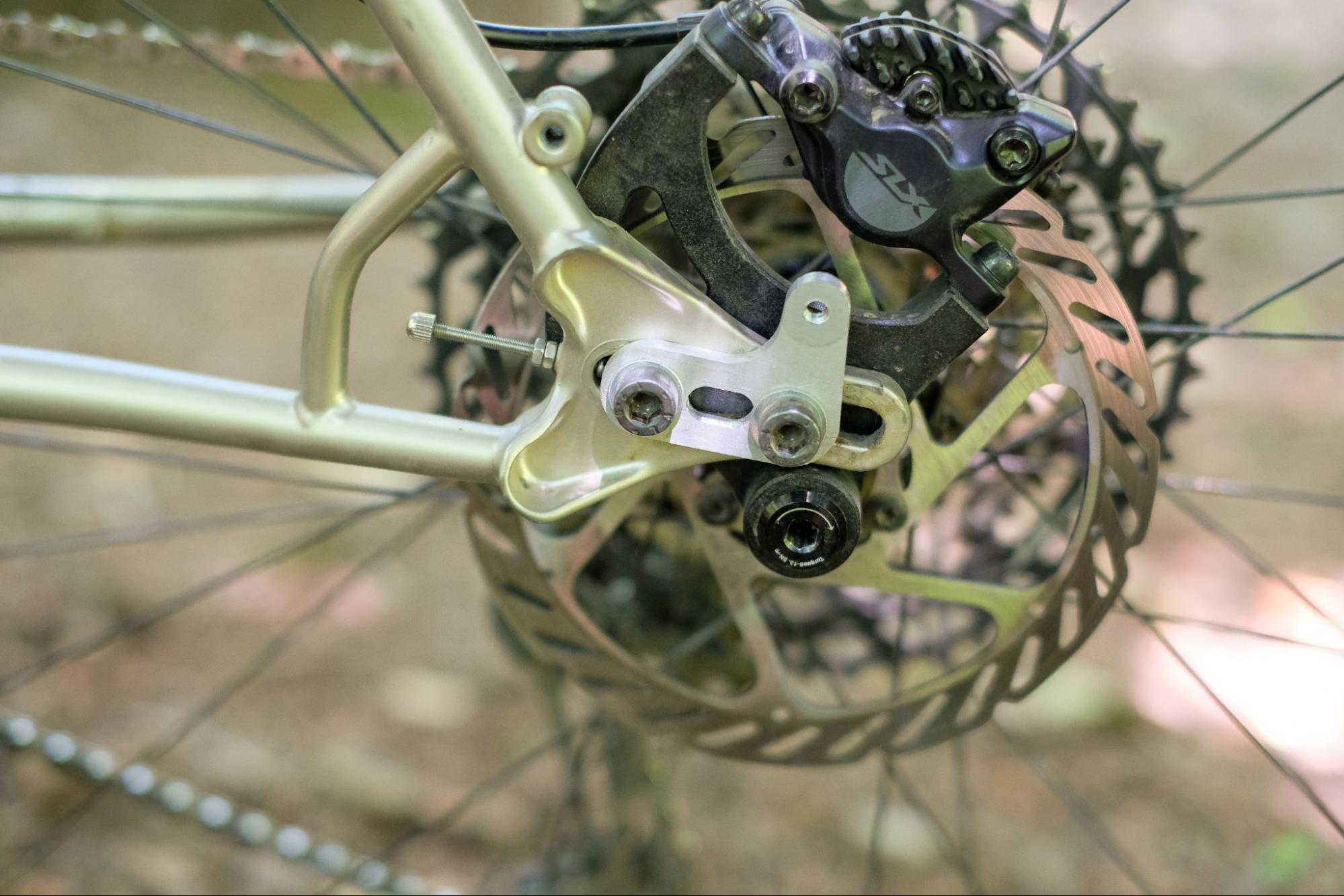
PM160 brake mount on sliding dropout. Note: The barrel braze-on will not be on the production frame.